RDI Advisory Board
VAMK’s RDI Advisory Board consists of experienced professionals and experts who possess a broad understanding of RDI activities, as well as the related challenges and opportunities. Members represent expertise from various fields, including technology, sciences, business, and legislation, ensuring a comprehensive approach to VAMK’s RDI strategy. The Advisory Board provides strategic guidance and in-depth expertise for VAMK’s research, development, and innovation activities.
The RDI Advisory Board consists of the following members: Anne Salovaara-Kero (Director, MIELI Mental Health Finland), Pasi Tuominen (CEO, Wapice), Angelique Irjala (CEO, Business KRS), Mika Palosaari (Director General, Centre for Economic Development, Transport and the Environment), Suvi Einola-Mikkola (Strategy and Development Director, Wellbeing Services County of Ostrobothnia), Kai Kamila (Lead HR Business Partner), Sarah Väre (Growth Director, Kvarken Council), Matias Mäkynen (Member of Parliament), Stefan Råback (CEO, VASEK), Juhani Soini (Vice Rector, Turku University of Applied Sciences), Mikael Hallbäck (Director, Ostrobothnia Chamber of Commerce), Johanna Punkari (Energy and Climate Specialist, City of Vaasa), Ilkka Rytkölä (Ecosystem Lead, Meyer Turku), Tomi Kankainen (Chief Innovation Officer, XD Solutions), Samuli Kuusista (Sales Development Director, Leinolat Group), and Sanna-Mari Kaakinen (Sustainability Manager, ABB).
VAMK RDI Advisory Board members

Anne Salovaara-Kero, Chair of the Regional Board, Wellbeing Services County of Ostrobothnia
My position of trust involves leading the Board of the Ostrobothnia Wellbeing Services County. At the core of this responsibility is ensuring high-quality and safe social services, healthcare, and rescue services for the region’s population. In addition to this political role, I also serve as the Director of MIELI Pohjanmaan mielenterveys ry, where my work focuses both on promoting mental wellbeing across the region and providing crisis support.
The vitality of Ostrobothnia depends on the wellbeing of its people. For this reason, I believe it is important for us in the region to strengthen cooperation between public actors, the private sector, and the third sector, with the goal of creating a regional health and social care ecosystem. Through this collaboration, we will also be better equipped to respond to future challenges, such as workforce availability. Such cooperation will benefit all sectors — both the business community and the population as a whole.

Pasi Tuominen, CEO, Wapice Oy.
I hold a Doctor of Technology (Automation) degree from Tampere University of Technology (1996). I worked as a researcher at Tampere University of Technology and VTT Technical Research Centre of Finland from 1989 to 1996. I served as a Principal Lecturer and Head of the Information Technology Department at Vaasa University of Applied Sciences from 1996 to 2000 and continued there as a part-time lecturer from 2000 to 2003.
I also worked as an electronics designer and programmer at Finbus Electronic Oy from 1996 to 2000. After that, I founded and became the CEO of Wapice Oy, a software company that delivers software projects for industrial clients and develops SaaS products. The company’s most significant products include IoT-TICKET, an industrial IoT platform, and Summium, a sales configurator. Today, Wapice Oy employs more than 300 people.

Angelique Irjala, CEO, Business Krisitnestad
My responsibilities at Business Kristinestad focus on developing the region’s business environment, promoting investments, and strengthening companies’ capacity for growth and renewal. I lead collaboration between businesses, educational institutions, and the public sector, and build networks that support the region’s competitiveness and internationalization. I consider close and goal-oriented cooperation with universities of applied sciences particularly important, as I see it as a key prerequisite for the long-term development of regional expertise, RDI activities, and the business community. I work actively with strategic development initiatives, particularly in the fields of the bioeconomy, circular economy, the green transition, and new business models.
I see the greatest opportunities for Ostrobothnia and Finland in strong RDI collaboration, the development of skills and expertise, and the renewal of export-driven industry. Competitiveness is built on long-term cooperation, well-functioning ecosystems, and ensuring the availability of a skilled workforce.

Mika Palosaari, Director general, Economic Development Centre of Ostrobothnia
Our responsibilities cover business development, employment, immigration, integration, culture, agriculture, rural development, transportation systems, and the implementation of the EU’s regional and structural policy programs. During the first 20 years of my career, I worked in Finnish companies, and for the past 10 years I have held positions in the public sector.
In particular, our Business Department is responsible for promoting entrepreneurship and economic activity, stimulating research, development, and innovation, and facilitating investments in collaboration with regional stakeholders. The Ostrobothnian counties have excellent opportunities to drive business renewal and growth, create sustainable innovations, and bring them to global markets.

Suvi Einola, Chief Strategy and Development Officer, Wellbeing Services County of Ostrobothnia
As the Director of Strategy and Development at the Ostrobothnia Wellbeing Services County, I lead four business units responsible for our organization’s strategy, IT management, data governance, digitalization, process development, project operations, communications, as well as research, development, and innovation. I see significant opportunities for growth and success in RDI activities within our region, as our operations are evolving toward a dynamic, interactive ecosystem where the different components facilitate each other’s success in an exceptional way.

Kai Kamila, Lead Business HR Partner, Wärtsilä Energy Services
I am a strategic HR professional and change leader with extensive experience in developing global organizations at Wärtsilä. My focus has been on business-driven HR partnership, leadership and competence development, and the implementation of complex change programs.
The key opportunities for Ostrobothnia and Finland as a whole lie in the growth of the circular economy, energy technology, and export-driven industry. Leveraging these opportunities requires strong networked collaboration among companies, research and educational institutions, and national and international partners.
The greatest challenge is ensuring the availability of skilled labor and the continuous development of expertise. Solutions are found through close cooperation, proactive competence management, and innovative new ways of working. In particular, artificial intelligence and digital solutions offer significant potential to enhance productivity, job meaningfulness, and competitiveness, as well as to create new pathways for skills development in the region.

Sarah Väre, Growth Manager, Kvarken Council EGTC
I am responsible for the EU projects of the Kvarken Council and for our Finnish members. I hold a degree in economics and work in cross-border cooperation and regional development, with a particular focus on tourism, transportation, innovation, and regional development. My background is in strategic marketing communications and international B2B business, and I have extensive experience in planning, managing, and communicating large-scale projects.
I believe that Ostrobothnia’s spirit of collaboration and its “can-do” attitude are key to accelerating Finland’s growth. Cross-border and internationally oriented activities create the conditions for new business, investments, and stronger competitiveness. For this reason, our region’s robust RDI ecosystem should be supported with even greater strategic focus.

Matias Mäkynen, Member of Parliament, SDP
Matias Mäkynen is an SDP Member of Parliament from Vaasa, Vice Chair of the party, and Chair of the Pohjanmaa Regional Council. He has served as Chair of both the parliamentary and internal party RDI working groups.
He emphasizes the central role of education and research in sustainable growth. The strengths of the Vaasa region are built on close collaboration between universities and businesses, where RDI activities provide the foundation for skills development, investments, and regional vitality—facilitated by institutions such as Vaasa University of Applied Sciences.

Stefan Råback, CEO, Vaasa Region Development Company VASEK
I have worked for over 25 years in both business and regional development, during which I have built an extensive network across Ostrobothnia. Through the development company I lead, we provide comprehensive business services throughout the entire lifecycle of a company. Our New Business Center, Startia, operates as a subsidiary of the company, assisting approximately 200 new businesses annually in establishing themselves in the Vaasa region.
The largest part of our business services is aimed at existing companies in the region, with around 800 businesses served each year. Another key focus is supporting business ownership transfers, assisting roughly 150 owners and successors annually. The company’s other main responsibilities include regional development and area marketing, which cover diversifying the business environment across the region, implementing development projects, addressing workforce needs, and facilitating investments.
Industry in Ostrobothnia is exceptionally strong, led by the EnergyVaasa Cluster, alongside many other industrial sectors. Sustained investment in research, development, and innovation, both at the company level and within the region’s educational institutions, is essential for maintaining and strengthening international competitiveness.
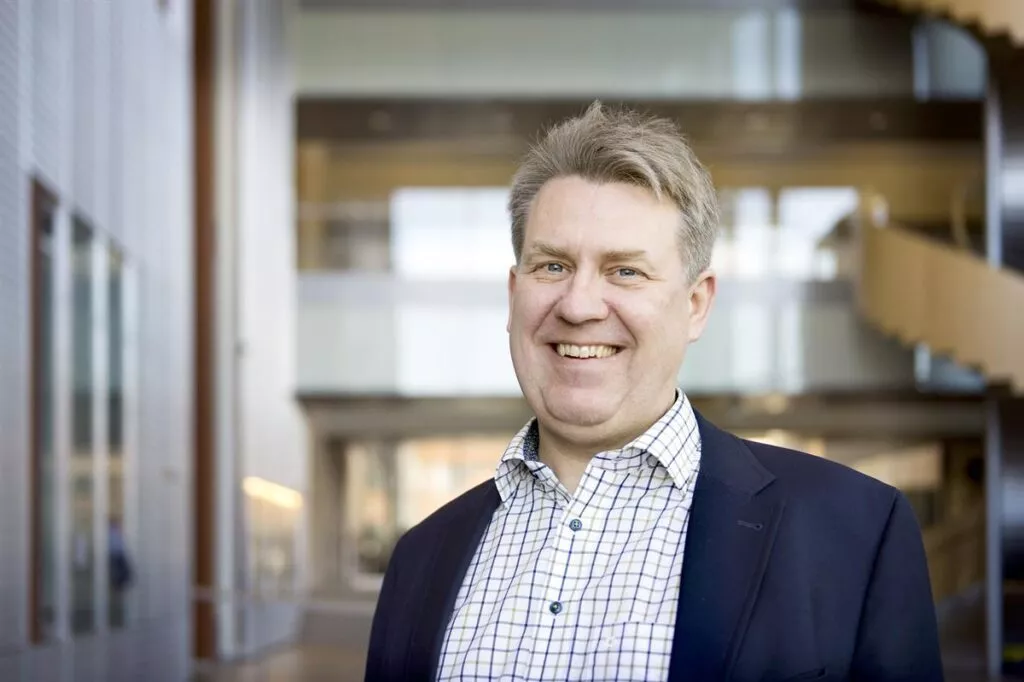
Juhani Soini, Vice Rector, Turku University of Applied Sciences
At Turku University of Applied Sciences, I am responsible for both research and education, as well as partnership and network collaboration. A particular focus of my work is building multidisciplinary expert networks and innovation ecosystems. In addition to my role as Vice Rector, I serve as a board professional in several SMEs and hold adjunct professorships (Docentships) at both the University of Turku and Tampere University.
In my view, the greatest opportunities for Vaasa and Finland lie in export-driven industries, the development of B2B products and services, and the resulting growth in industrial revenue. Realizing this potential requires strong RDI (Research, Development and Innovation) and subcontracting networks at both national and international levels. A key challenge will be the intense competition for skilled talent. This can be addressed through robust collaboration networks and efficient supply and subcontracting chains.

Johanna Punkari, Energy and Climate Specialist, City of Vaasa
Vaasa is the Energy Capital of the Nordic countries. The largest energy technology cluster in the Nordics is located here, producing sustainable energy solutions whose carbon handprint is significant on a global scale. The energy sector is subject to continuous technological development, and education as well as research, development and innovation (RDI) activities must respond to the needs of companies. We are currently undergoing a major transition as ways are being sought to transform the entire energy system into a low-carbon one. Our region needs skilled professionals from a wide range of disciplines. The city’s own targets are ambitious as well.
I believe that, for example, different forms of energy production and storage technologies, IoT and other digital solutions, carbon capture and storage solutions, sustainable modes of transport, and the choices made by residents will help the city achieve carbon neutrality while maintaining the competitiveness of companies in the region.
My work involves identifying innovative solutions to promote sustainable development and achieve carbon neutrality in the city. This requires multidisciplinary cooperation among regional stakeholders. I see the VAMK RDI Advisory Board as an interesting platform where different collaboration needs can meet.